
Christianity is the near-universal religion of the Marshall Islands, with over 96% to 98% of the population identifying as Christian. Introduced by European and American Protestant missionaries in the 19th century, the faith rapidly supplanted indigenous polytheistic practices. Today, Christian values and rituals are deeply woven into the nation’s governance, education system, and daily cultural protocols.
Major Christian Denominations
The religious landscape is highly homogeneous but divided into several major church groups:
- United Church of Christ – Congregational (UCCCMI): This is the oldest and most dominant denomination, accounting for approximately 47% to 48% of the population. It stems from the original mission work established in 1857 by the American Board of Commissioners for Foreign Missions.
- Assemblies of God (Pentecostal): The second-largest group, encompassing around 14% to 16.2% of residents.
- Roman Catholic Church: Accounting for roughly 8.5% to 9.3% of the population.
- The Church of Jesus Christ of Latter-day Saints: A rapidly growing group that grew to about 7% to 8% of the population.
- Bukot Nan Jesus: An indigenous denomination that separated from the Assemblies of God, claiming about 5.4% of the population.
- Other Minor Groups: These include Baptists, Seventh-day Adventists, the Salvation Army, and Full Gospel churches.
Influence on Public Life and Government
While the Constitution of the Marshall Islands guarantees freedom of religion and prohibits a state church, Christianity holds immense institutional influence:
- Constitutional Preamble: The nation’s founding document explicitly begins with the phrase, “WE, THE PEOPLE OF THE REPUBLIC OF THE MARSHALL ISLANDS, placing our trust in God…”.
- Official Events: Public ceremonies, government sessions, and school functions routinely open and close with Christian prayers.
- National Holidays: The official calendar recognizes significant Christian events, including Good Friday, Christmas, and Gospel Day (a holiday celebrating the arrival of Christianity to the islands).
Education and Social Services
Religious organizations are critical pillars of the country’s social infrastructure:
- Church Schools: Public schools do not teach religion, but denominations operate heavily utilized private institutions. For example, the UCCCMI operates nine elementary schools and four high schools.
- Pastoral Training: Religious leaders are educated locally, notably at the Marshalls Theological College, which trains pastors from all across Micronesia.
Cultural Synthesis
The historic transition to Christianity involved an accommodation of indigenous Marshallese hierarchies. Missionaries used the traditional term Irooj (meaning “chief”) to translate “Lord” or “God,” merging the new monotheistic faith with deep cultural respect for ancestral authority. Although traditional gods are no longer worshipped, beliefs regarding spirits or localized spiritual warfare still lightly persist beneath the surface of daily Christian life.
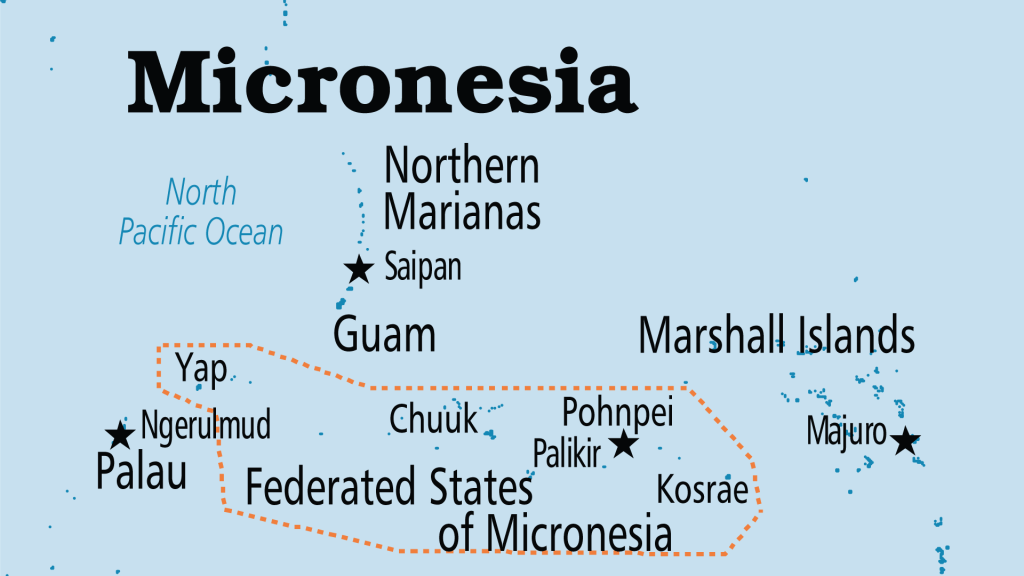
Links for further overview of the Marshall Islands:
 Stichting HEALING THE NATIONS