
Christianity is the second-largest religion in Egypt, serving as the spiritual home to one of the oldest continuous Christian communities in the world. While estimates vary due to a lack of official census figures, Christians—predominantly known as Copts—make up approximately 10% of Egypt’s 109 million population.
The vast majority of Egyptian Christians belong to the Coptic Orthodox Church, an independent Oriental Orthodox body led by the Pope of Alexandria, currently Pope Tawadros II.
Key Historical Pillars
- Apostolic Foundations: According to sacred tradition, Christianity was brought to Egypt by St. Mark the Evangelist around 42 CE during the Roman era. The city of Alexandria quickly blossomed into a primary global hub of early Christian scholarship and theology.
- The Birth of Monasticism: During periods of Roman persecution, particularly the “Era of the Martyrs” under Emperor Diocletian, many Egyptian Christians fled into the desert. This ascetic movement birthed Christian monasticism, spearheaded by foundational figures like Saint Anthony the Great.
- The Great Schism (451 CE): At the Council of Chalcedon, the Egyptian Church split from the broader Western and Byzantine churches over theological differences regarding the divine and human natures of Jesus Christ. The Copts maintained a “Miaphysite” theology, preserving their distinct autonomy ever since.
- The Arab Conquest (639–641 CE): Following the Muslim conquest, Egypt’s population underwent a gradual process of Islamization. Over centuries, the indigenous Coptic language was replaced by Arabic for daily use, though Coptic remains alive today as the primary liturgical language of the church.
Denominational Breakdown
While the overwhelming majority of Christians in Egypt are Orthodox, the community features a diverse tapestry of traditions:
| Denomination | Approximate Share of Christian Population | Head of Church / Affiliation |
|---|---|---|
| Coptic Orthodox | ~90% to 95% | Pope of Alexandria (Coptic Orthodox Church) |
| Coptic Catholic | ~5% (combined minority) | Eastern Catholic Church (in communion with Rome) |
| Protestant / Evangelical | ~5% (combined minority) | Includes Evangelical Presbyterian and Anglican/Episcopal churches |
| Eastern (Greek) Orthodox | ~5% (combined minority) | Historical Greek patriarchate ties |
Cultural Identity & Modern Life
- The Coptic Language: Directly descended from ancient Egyptian hieroglyphs, the Coptic language uses Greek characters supplemented by Demotic letters. While no longer spoken natively in daily life, it is heavily preserved through ancient church hymns and liturgies.
- Distinct Calendar: The Coptic Church adheres to the ancient Julian-based Coptic calendar. Because of this, major religious holidays like Christmas (January 7th) and Easter are celebrated weeks after Western Christian dates.
- The Coptic Cross Tattoo: It is a deeply ingrained tradition for many Egyptian Christians to get a small cross tattooed on the inside of their right wrist during childhood as a lifelong symbol of faith and identity.
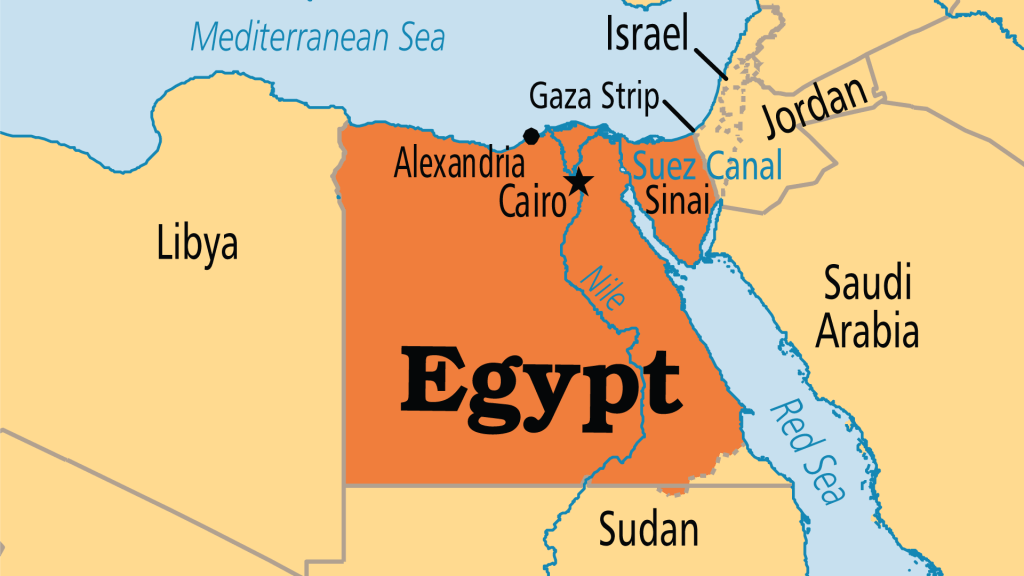
- Geographic Pockets: While Christians live throughout the entirety of Egypt, major demographic concentrations exist in Cairo, Alexandria, and rural provinces across Upper Egypt (such as Minya and Asyut).
- Modern Social Realities: Modern Copts are deeply integrated into Egyptian society, yet the community frequently navigates localized social tensions, restrictions on building new churches, and security vulnerabilities primarily stemming from regional extremist elements.
Links for further overview of Egypt:

