
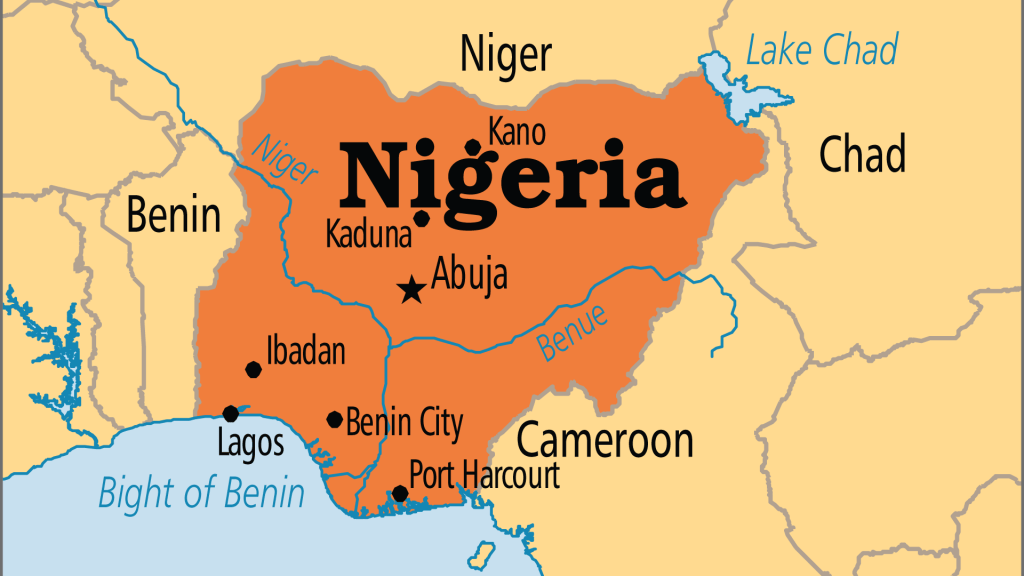
Christianity in Nigeriarepresents one of the largest Christian populations in the world, with over 80 to 90 million adherents. This makes Nigeria home to the sixth-largest Christian population globally and the largest on the African continent. The country is roughly divided in half between a predominantly Muslim north and a heavily Christian south, creating a unique co-dominant religious landscape.
Demographic Distribution
According to data compiled by organizations like the Pew Research Center and Statista, Christians make up approximately 43% to 46% of Nigeria’s total population, running a very close second to Islam (approx. 50% to 56%).
- Regional Patterns: Christianity is the dominant faith in the Southern and Central (Middle Belt) regions of Nigeria. Major ethnic groups in the east and south, such as the Igbo, Ibibio, and Ijaw, practice Christianity almost entirely.
- Denominational Breakdown:
- Protestants & Pentecostals: Make up the vast majority (around 70–75% of Nigerian Christians). This includes massive, highly influential evangelical and independent Pentecostal megachurches, alongside traditional denominations like the Church of Nigeria (Anglican) and the Nigerian Baptist Convention.
- Roman Catholics: Account for roughly a quarter of the Christian population, maintaining a deeply rooted presence primarily in the southeast.
Historical Evolution
The trajectory of the Christian faith in Nigeria unfolded across two major waves:
| Era | Key Actors & Movements | Impact & Outcomes |
|---|---|---|
| 15th–16th Century | Portuguese Augustinian and Capuchin friars. | Limited coastal footprint. Established early contact in kingdoms like Benin and Warri, but the efforts faded as focus shifted heavily toward trade and the transatlantic slave trade. |
| 19th Century | British missionary societies (CMS, Methodists) and returning freed African slaves (Saros) from Sierra Leone. | Permanent establishment. Spearheaded by figures like Bishop Samuel Ajayi Crowther—a rescued Yoruba slave who became the first African Anglican bishop—this wave translated the Bible into local languages and firmly planted the church inland. |
| Late 20th Century to Present | Indigenous movements and the 1970s campus revivals. | Exponential growth. Fueled the meteoric rise of African Independent Churches and Charismatic/Pentecostal megachurches. |
Contemporary Social & Political Dynamics
- The Prosperity Gospel & Literature: Modern Nigerian Christianity is heavily characterized by vibrant Pentecostalism, where the “prosperity gospel” holds significant sway. This complex relationship with materialism and faith is a central theme explored deeply by contemporary authors featured in The Conversation.
- Education and Social Infrastructure: Historically, Christian missions laid the foundational groundwork for Nigeria’s modern educational and healthcare systems, building some of the country’s earliest western-style schools and hospitals.
- Security & Persecution: Nigerian Christians face significant security threats, particularly in the North and Middle Belt regions. Extremist groups such as Boko Haram and the Islamic State West Africa Province (ISWAP), alongside localized conflicts involving radicalized factions, have targetted churches, leading to high numbers of fatalities and displacements. Despite these challenges, the Nigerian church remains a powerhouse for international evangelical missionary deployment worldwide.
Further links for overview of Nigeria:

