
Timor-Leste is the most densely Christian country in Asia, with roughly 99% of its population identifying as Christian, and over 97% specifically adhering to Roman Catholicism. This makes the young Southeast Asian country the most Catholic nation in the world per capita outside of Vatican City. The Catholic Church holds immense political and social influence, and its history is deeply intertwined with Timor-Leste’s long struggle for national sovereignty.
The History of Faith and Resilience
- Portuguese Colonization (16th Century – 1975): Portuguese Dominican missionaries first brought Catholicism to the island in the early 1500s. However, after more than 400 years of colonial rule, only about 20% of the population had actually converted to Catholicism, as most locals maintained traditional animist beliefs.
- The Indonesian Occupation (1975–1999): Following Portugal’s sudden departure, Indonesia invaded and annexed East Timor. Under Indonesian rule, all citizens were constitutionally required to register under one of five officially recognized monotheistic religions (which did not include local animism).
- Mass Conversions: Instead of converting to Islam (the majority religion of Indonesia), the Timorese people chose Catholicism en masse. By the late 1980s, Catholic adherents skyrocketed from 20% to 95% of the population.
- A Shield Against Atrocities: The church gained absolute trust because local priests, nuns, and bishops bravely spoke out against Indonesian military abuses, smuggled information to the outside world, and offered physical sanctuary to civilians. Church leaders also unified the resistance by adopting Tetum (rather than Indonesian) as the official language of the liturgy.
Current Demographics & Legal Status
According to official censuses and demographic surveys, the religious landscape is highly homogeneous:
- Roman Catholic: ~97.3% to 97.6%
- Protestant: ~1.96% to 2.0%
- Islam and Others: < 1.0%
The Constitution of Timor-Leste guarantees absolute freedom of religion and maintains a formal separation between church and state. However, Section 11 explicitly acknowledges and values the Catholic Church for its foundational role in the national liberation process. In 2015, the government signed a formal Concordat with the Vatican, solidifying state subsidies for Catholic educational and socio-charitable institutions.
Modern Role and Cultural Fusion
- Social Infrastructure: Because the state is still developing its infrastructure following the total devastation of the 1999 independence referendum, the Church remains the primary provider of healthcare, primary/secondary education, and social safety nets across rural districts.
- Syncretism with “Lulik”: Timorese Catholicism is deeply intertwined with ancient indigenous traditions. Many Catholics fully participate in mass while simultaneously observing ancestral rituals, consulting community sacred houses, and respecting the crocodile as a sacred animal.
- Papal Milestones: Papal visits have served as major historic turning points for the nation. In 1989, Saint John Paul II visited during the height of the occupation, drawing global media attention to the plight of the Timorese. In September 2024, Pope Francis made a historic apostolic journey to Dili, drawing hundreds of thousands of faithful in one of the largest public masses relative to local population density ever recorded.
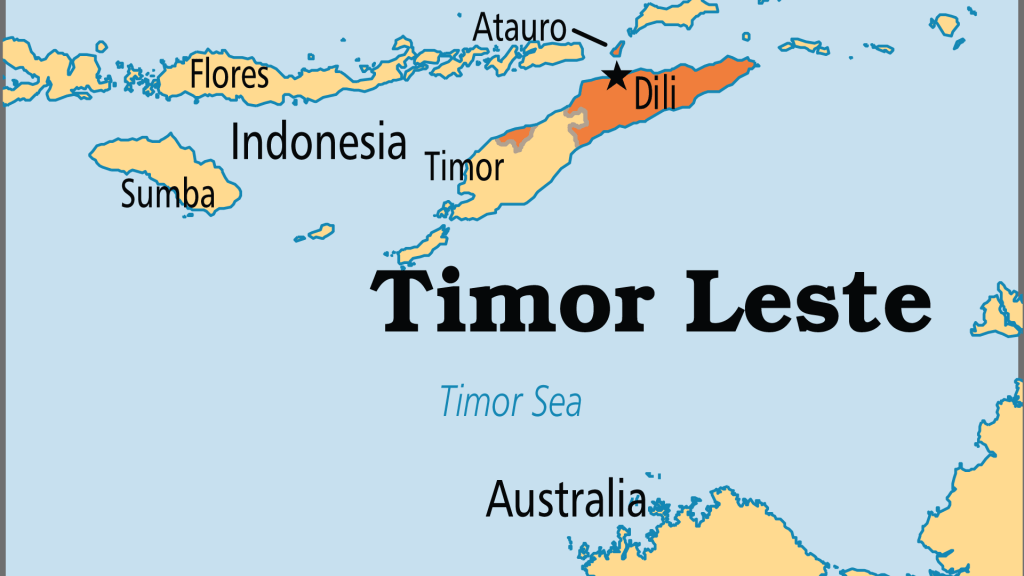
Links for further overview of Timor Leste:
 Stichting HEALING THE NATIONS