
Christianity is the predominant religion in Vanuatu, with approximately 83% to 93% of the population identifying as Christian. The nation’s constitution explicitly binds its identity to Christian principles alongside traditional Melanesian values, and the church continues to play an essential role in its social, educational, and political infrastructure. [1, 2, 3, 4, 5]
Major Christian Denominations
The Christian landscape in Vanuatu is highly diverse, stemming from various European missionary efforts starting in the 19th century: [1, 2]
| Denomination | Estimated Share | Historical & Current Context |
|---|---|---|
| Presbyterian | 26% – 32% | The largest single church group. It was famously established in the 19th century by Scottish missionary John G. Paton. |
| Assemblies of God (Pentecostal) | 14% – 25% | A rapidly growing Evangelical/Charismatic movement in the islands. |
| Anglican | 12% – 13% | Represented by the Church of Melanesia, which historically had a powerful political impact. Vanuatu’s first Prime Minister, Walter Lini, was an Anglican priest. |
| Roman Catholic | 12% – 13% | Established during the Anglo-French colonial era, when Vanuatu was known as the New Hebrides. |
| Seventh-day Adventist | 11% – 12% | A significant Protestant presence with robust local networks. |
The Vanuatu Christian Council (VCC)
The major historic denominations cooperate heavily through the Vanuatu Christian Council (VCC). The VCC acts as a bridge between the state and religious bodies. For example, the national government pays the salaries of teachers at church-operated schools established prior to independence, and the VCC provides the standard religious education curriculum taught for at least one hour a week in secondary schools. [1, 2, 3]
Intersection with Kastom and Native Movements
While Christianity is near-universal, it directly coexists with Kastom (indigenous traditional culture and law). Many ni-Vanuatu practice a form of faith that blends traditional ancestral rituals and land-based ceremonies with Christian theology. [1]
Historically, early missionaries forced locals to abandon certain traditions, such as the spiritual consumption of Kava. This strict imposition triggered cultural resistance movements, most notably the John Frum Movement on Tanna Island. Operating as both a political party and a “cargo cult,” its adherents (about 5% of the population) eschewed Western missionary rule while waiting for a mystical American figure to bring them wealth and autonomy. Today, however, most communities smoothly navigate both their Christian and Kastom heritage. [1, 2, 3]
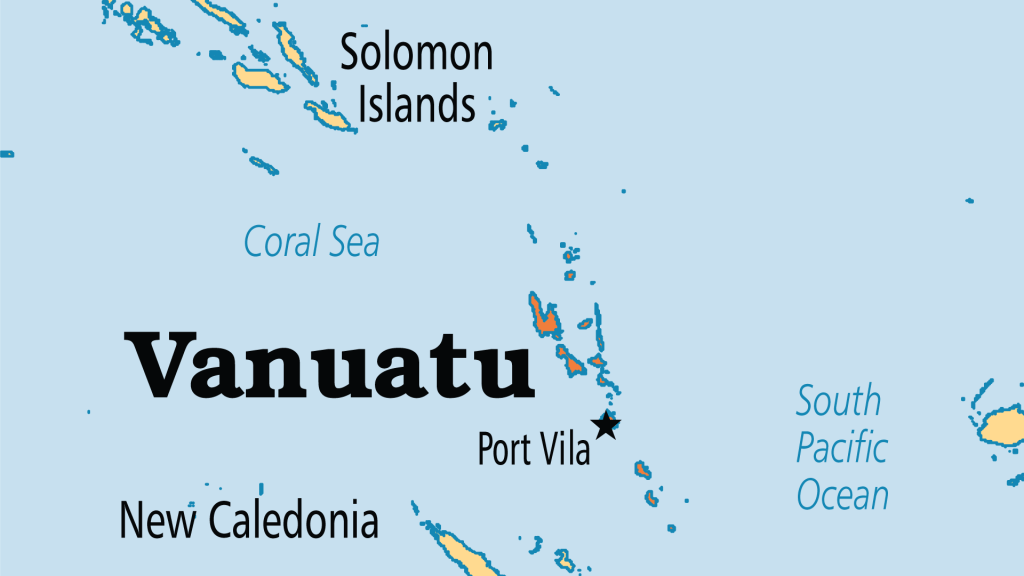
Further links for overview of Vanuatu:

