
Christianity is practiced by roughly 6% to 8% of the population in Myanmar, making it the country’s second-largest religion.
Demographics and History
- Adherents: Most Christians belong to ethnic minority groups, particularly the Chin, Kachin, and Kayin (Karen) peoples. It remains rare among the ethnic Bamar majority.
- Denominations: About two-thirds of Christians are Protestants—predominantly Baptists, following a legacy of 19th-century missionary work by figures like Adoniram Judson. Catholics make up a significant portion of the remaining third, alongside growing Pentecostal and evangelical groups.
- Origins: While early Catholic and Portuguese presence dated back to the 16th and 17th centuries, large-scale growth arrived with 19th-century Protestant missions. Foreign missionaries were expelled by the government in 1966, leaving local churches to self-manage.
Current Challenges and Conflict
- Persecution: Christians face severe religious and ethnic targeting, heavily documented by organizations like Open Doors.
- Civil War Impact: Since the 2021 military coup, violence has escalated. Christian-majority regions like Chin State and Kachin State have experienced church destructions, air strikes, and the displacement of communities caught in the civil war, as reported by Global Christian Relief.
- Restrictions: The military government frequently restricts religious gatherings, imposes permit hurdles, and targets Christian villages and clergy amidst wider conflict.
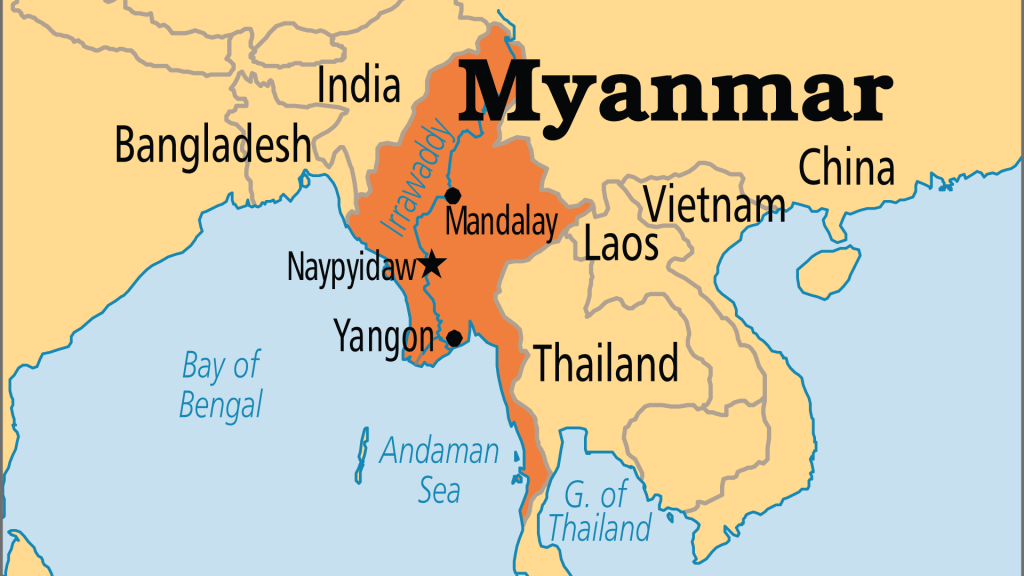
Links for further overview of Myanmar:

