
Christianity is the second-largest religion in Bahrain, making up approximately 12% to 14.5% of the total population as of recent estimates. While Islam is the official state religion, Bahrain is recognized for its high degree of religious tolerance compared to its neighbors, allowing Christians to practice their faith freely in registered places of worship.
Demographics and Communities
The Christian population is divided into two distinct groups:
- Expatriate Christians: They constitute the vast majority of the community and are primarily migrant workers from India, the Philippines, Sri Lanka, and various Arab and Western countries.
- Native Bahraini Christians: Bahrain is one of the few Gulf Cooperation Council (GCC) countries with a native Christian population. There are approximately 1,000 Christian citizens. Most are descendants of immigrants from Iraq, Palestine, and Jordan who arrived between 1930 and 1950 and were granted citizenship.
Major Denominations and Churches
There are 19 officially registered churches in Bahrain. The community is diverse, with Catholic, Orthodox, and Protestant representation:
- Catholic Church: Roman Catholics are the largest denomination, with about 140,000 adherents.
- Our Lady of Arabia Cathedral in Awali is the largest Catholic church in the Arabian Peninsula.
- Sacred Heart Church in Manama was the first Catholic church built in the Persian Gulf (1939).
- Orthodox and Protestant:
- St. Christopher’s Cathedral (Anglican) serves as a major hub for the Protestant and Anglican communities.
- The National Evangelical Church (1906) was the first to offer Christian services in the country.
- Various Indian Orthodox and Syrian Orthodox churches serve the large South Asian community.
Historical Significance
Bahrain has a deep Christian heritage dating back to the pre-Islamic era:
- Nestorian Heritage: In the 5th century, Bahrain was a center for Nestorian Christianity, with the village of Samahij serving as a bishopric.
- Recent Discoveries: In 2024, archaeologists confirmed the discovery of a 7th-century Christian building in Samahij, the first physical evidence of a Nestorian monastery in the country.
- Toponymy: Some local place names still reflect this history, such as Al Dair, which means “the monastery”.
Legal Status and Social Standing
- Religious Freedom: The constitution provides for freedom of worship, and the government often donates land for church construction.
- Political Representation: Native Christians hold a respected position in society. The government has historically appointed Christian members to the Shura Council (the upper house of Parliament), and figures like Alees Samaan have served as high-ranking diplomats.
- Restrictions: While open practice is allowed for recognized groups, proselytism (converting others to Christianity) remains illegal. There is significant societal pressure against Muslims who might wish to convert to Christianity.
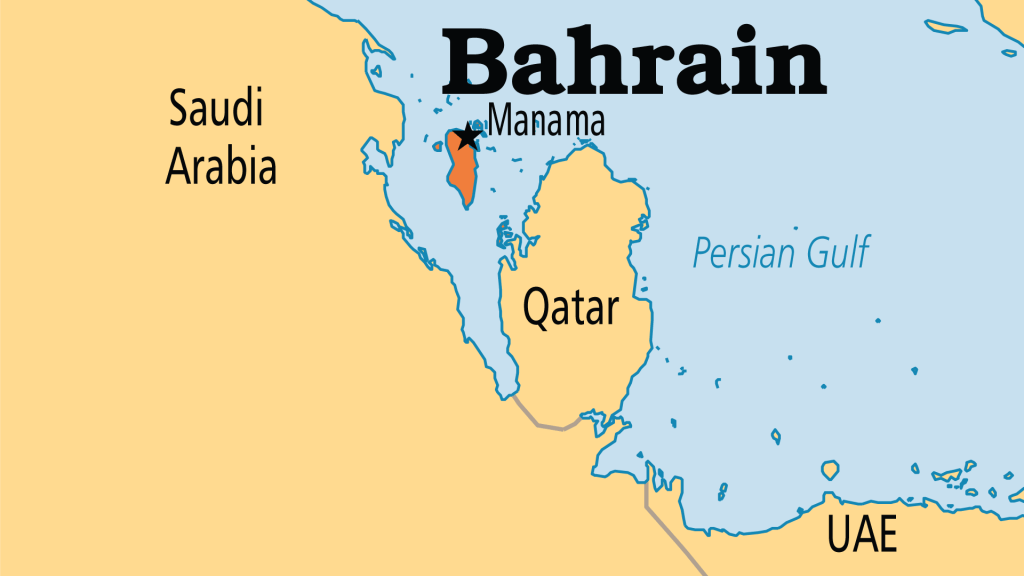
Links for further overview of Bahrain:

