
Christianity is a minority religion in Kyrgyzstan, accounting for roughly 7% of the population in a nation where over 80% to 90% identify as Sunni Muslim. While the country is constitutionally a secular democracy that guarantees freedom of religion, Christians—particularly ethnic Kyrgyz converts—face significant legal restrictions and societal pressure.
Demographics and Major Denominational Groups
The Christian landscape in Kyrgyzstan is split between traditional ethnic minority churches and newer, non-traditional denominations.
- Russian Orthodox Church: Making up about 40% of the Christian population (around 2.8% of the country), this is the largest and most widely recognized Christian body. It primarily serves the ethnic Russian and Slavic minorities. It is largely left unhindered by the government due to its insular, non-proselytizing nature.
- Protestantism: Accounting for about 60% of the Christian community, Protestants represent the fastest-growing sector. Pentecostals represent the largest Protestant subgroup (over 70 registered churches), followed closely by Baptists. Other groups include Presbyterians, Lutherans, Charismatics, and Seventh-day Adventists.
- Roman Catholic Church: There is a tiny, historical Catholic presence in Kyrgyzstan. Most Catholics are descendants of ethnic Germans or Poles deported to Central Asia by Joseph Stalin during the 1930s and 1940s.
Historical Background
Christianity in Kyrgyzstan has ancient roots, dating back to the 7th and 8th centuries when Nestorian and Assyrian missionaries traveled along the Silk Road. It was largely supplanted by Islam over successive centuries. Modern Christianity arrived in the 18th and 19th centuries as the Russian Empire expanded into Central Asia, bringing Russian Orthodoxy. During the Soviet era, state-enforced atheism repressed all religions. Following the collapse of the Soviet Union in 1991, the country saw a major religious revival, alongside the arrival of Western and South Korean evangelical missionaries.
Growing Local Identity
A major shift in recent decades is the rise of indigenous Kyrgyz Christians (often estimated between 25,000 and 50,000 people). Historically, Christianity was viewed strictly as a foreign or “Russian” religion. Today, many evangelical and Protestant congregations hold services entirely in the Kyrgyz language, utilizing traditional Kyrgyz music and instruments. This has allowed ethnic Kyrgyz believers to embrace the faith while preserving their cultural identity.
Legal and Societal Challenges
Despite formal constitutional protections, practicing Christianity can be difficult. The country is monitored on global religious freedom registries, such as the Open Doors World Watch List.
- Restrictive Religion Laws: Strict legal frameworks govern religious organizations. Organizations must officially register with the State Committee on Religious Affairs (SCRA) to operate legally. To qualify for registration, a church must gather at least 200 adult citizen members—a requirement that small, localized house churches find nearly impossible to meet. Unregistered religious activities, proselytization, and unauthorized literature distribution face penalties or outright bans.
- Persecution of Converts: Ethnic Kyrgyz who convert from Islam to Christianity bear the brunt of societal hostility, particularly in conservative rural areas. Converts frequently face physical violence, house arrest, domestic abuse, shunning by neighbors, and workplace discrimination.
- Burial Disputes: One of the most painful flashpoints involves the burial of deceased Christian converts. Local Muslim leaders and villagers routinely block the burial of Christian converts in local, public village cemeteries. This has occasionally forced grieving families to exhume bodies or seek secret, remote burial sites.
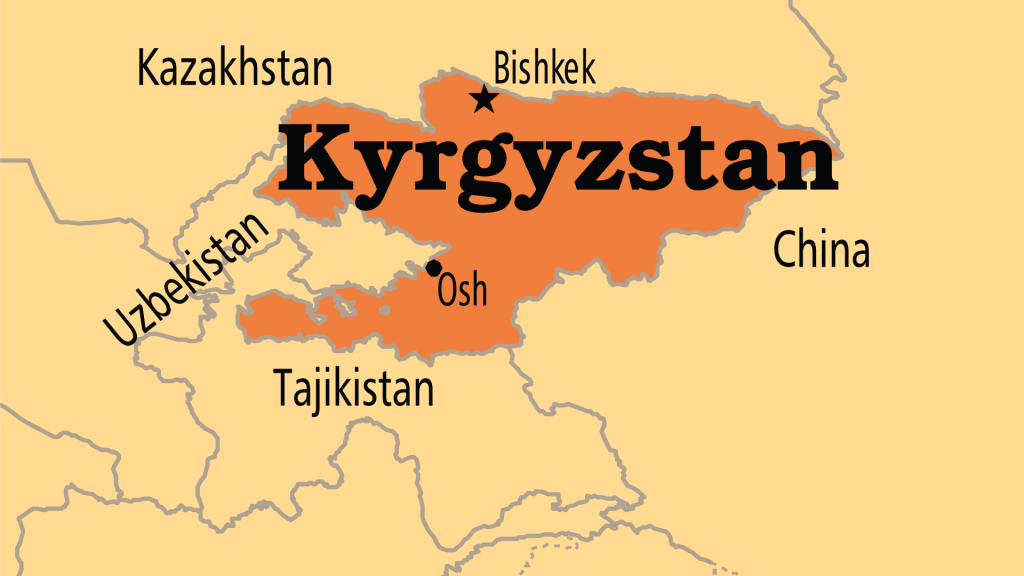
Links for further overview of Kyrgyzstan:

