
Christianity is the primary religion in Belarus, with Eastern Orthodoxy serving as the largest denomination. The religious landscape is characterized by a mix of Orthodox, Catholic, and Protestant communities, largely influenced by the country’s history as a borderland between Western and Eastern European powers.
Religious Demographics
While estimates vary by source, the general breakdown of the population is:
- Eastern Orthodoxy: ~53% to 83% (widely considered the dominant cultural faith)
- Roman Catholicism: ~6% to 15% (strongest in the Grodno Region and near the Polish border)
- Protestantism: ~1% to 3% (showing growth in recent decades)
- Irreligious / Atheist: ~8% to 41% (a legacy of Soviet-era state atheism)
Major Denominations
Belarusian Orthodox Church (BOC)
The BOC is an Exarchate of the Russian Orthodox Church (Moscow Patriarchate).
- It is the largest religious organization with over 1,700 parishes.
- Led by Metropolitan Benjamin (Vienijamin) since 2020.
- Holds significant cultural influence and maintains a close relationship with the state.
Roman Catholic Church
The second-largest denomination, historically tied to the Polish-Lithuanian Commonwealth.
- Concentrated in western Belarus; about 32% of the Grodno Region is Catholic.
- Includes many ethnic Poles, but also a significant number of ethnic Belarusians.
- Operates 4 dioceses and roughly 500 communities.
Belarusian Greek Catholic Church (Uniate)
A small but historically significant “bridge” church that follows Eastern (Byzantine) rites but remains in communion with the Pope.
- It was the dominant church in the late 18th century before being suppressed by the Russian Empire.
- Today, it is a small minority (approx. 10,000–100,000 sympathizers) often associated with Belarusian national identity and the use of the Belarusian language in liturgy.
Protestantism
Includes a variety of denominations such as Evangelical Christians, Baptists, Seventh-day Adventists, and Lutherans.
- Protestant groups have seen the most rapid growth since independence.
- There are over 1,000 Protestant communities across the country.
Historical Context
- 10th Century: Christianity first arrived, with the first church built in Polotsk in 986.
- 14th–18th Century: Catholicism grew under the Grand Duchy of Lithuania and the Polish-Lithuanian Commonwealth.
- 1596: The Union of Brest created the Greek Catholic Church, which eventually included 70% of the population.
- 1839: The Synod of Polotsk formally abolished the Uniate Church, forcing many into Orthodoxy under Russian Imperial rule.
- Soviet Era: Decades of state atheism led to the closure of most churches; by 1939, virtually all churches were closed, though some reopened after WWII.
- Post-1991: Independence brought a religious revival, though the state remains deeply secular.
State and Society
- Freedom of Religion: While the constitution guarantees religious freedom, groups often face state registration requirements and restrictions on building or public events.
- Secularism: Despite high identification with Christianity, regular church attendance is low (estimated at 18% for Orthodox and 50% for Catholics).
- Political Context: The government under Alexander Lukashenko maintains close ties with the Orthodox Church but has occasionally had friction with Catholic leaders over political issues.
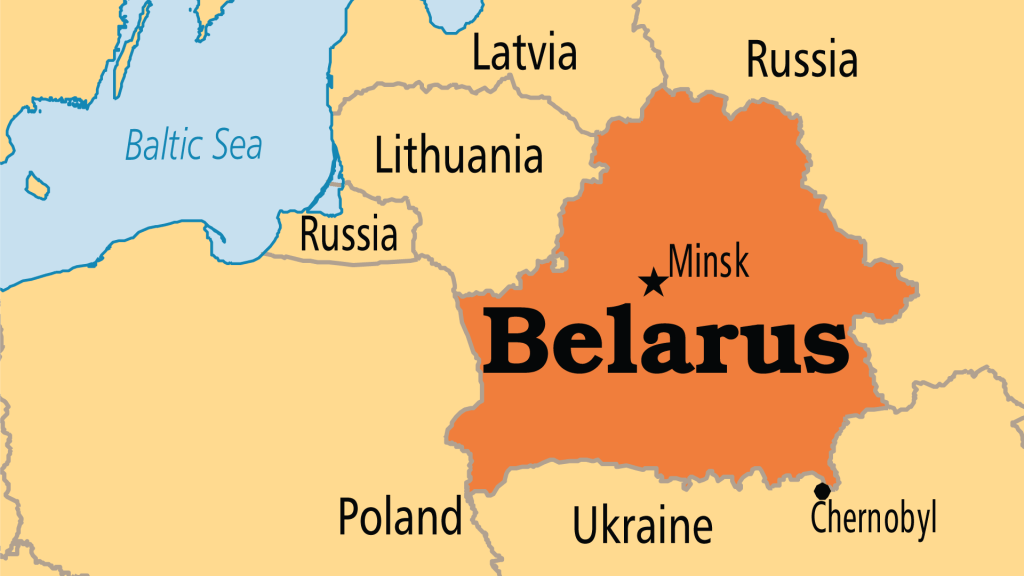
Links for further overview of Belarus:
 Stichting HEALING THE NATIONS