
Christianity is the largest and most historically significant religion in Russia, with approximately 67–70% of the population identifying as Christian as of 2025. The vast majority of these adherents belong to the Russian Orthodox Church (ROC), which serves as a central pillar of Russian national identity and culture.
Major Denominations
While Orthodoxy dominates, Russia’s Christian landscape includes several distinct groups:
- Russian Orthodox Church (ROC): Representing roughly 67% of the population, it is the state’s most influential religious institution [0.4.1, 0.4.4].
- Old Believers: A traditionalist branch that split from the ROC in the 17th century; they maintain ancient rituals and number between 500,000 and 1.3 million [0.4.2, 0.4.24].
- Protestantism: Includes Baptists, Pentecostals, and Lutherans, making up about 1–2% (roughly 1.5 to 3 million people) [0.4.16].
- Catholicism: A small minority of fewer than 1% (approx. 140,000 to 770,000 people), primarily among ethnic Germans, Poles, and Lithuanians [0.4.13].
Historical Timeline
The history of Christianity in Russia is defined by three major eras:
| Kievan Rus (988) | Prince Vladimir the Great officially converted the state to Orthodox Christianity.
| Soviet Period (1917–1991) | Decades of state atheism led to mass persecution, destruction of churches, and execution of clergy.
| Post-Soviet Era (1991–Present) | A massive religious revival occurred, with thousands of churches rebuilt and the ROC regaining significant political power.
Modern Role and Challenges
Christianity in modern Russia is characterized by its close, frequently supportive relationship with the Kremlin’s conservative, nationalistic agenda. While identification is high, actual engagement is low, with estimates suggesting only 3–5% of believers attend services regularly. Furthermore, legislation like the 2016 Yarovaya Law has placed limitations on missionary activity, disproportionately impacting non-Orthodox denominations.
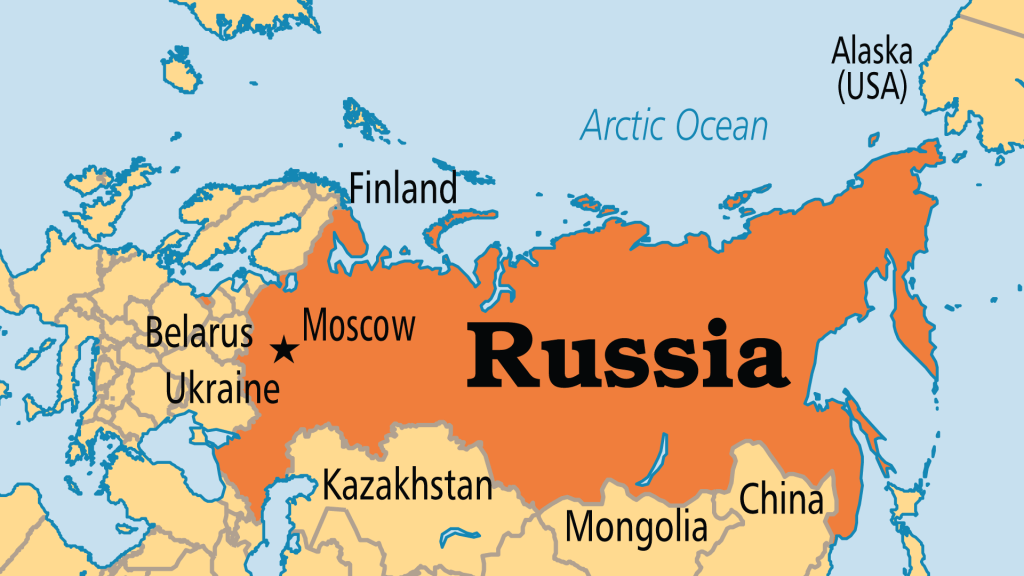
Links for further overview of Russia:
 Stichting HEALING THE NATIONS